
 Evan MattsonandGitHub
3bbc81554b
Evan MattsonandGitHub
3bbc81554b
* Improve the handling of intermediate outputs for workflows and orchestrations

* Address PR review feedback on intermediate output forwarding

- Switch workflow.as_agent() forwarding to an explicit allowlist of {output,
  intermediate, data, request_info} so orchestration-internal events
  (group_chat, handoff_sent, magentic_orchestrator) stay inside the workflow
  instead of leaking into agent responses via str(data) coercion.
- Stop raising on intermediate AgentResponseUpdate in non-streaming run();
  surface the partial as a Message with text_reasoning content. The defensive
  raise still applies to terminal output events, where Update payloads would
  corrupt message ordering.
- Extend the DevUI workflow-event mapper so intermediate yields wrapping
  plain strings, Messages, and list[Message] render as visible output items
  instead of generic completed-trace events.
- Add orchestration coverage for GroupChat, Handoff, and Magentic builders
  (default vs intermediate_outputs=True; structural where end-to-end is heavy).

* Lift output-designation policy into a value type

Replace the ``Workflow._output_executors`` list and the
``RunnerContext.should_label_as_intermediate`` Protocol method with a single
immutable ``OutputDesignation`` value type owned by ``Workflow``. Thread the
designation as a parameter through the existing call chain (Runner ->
EdgeRunner -> Executor -> WorkflowContext) so ``yield_output`` consults the
threaded snapshot directly rather than calling back into the runner context.

Removes the ``InProcRunnerContext._workflow`` back-reference and the
``WorkflowBuilder.build()`` assignment that wired it up. Adds the public
predicate ``Workflow.is_terminal_executor(executor_id)`` for external
observers; ``OutputDesignation`` itself stays package-internal.

Key decisions
- ``OutputDesignation.designated`` is ``frozenset[str] | None`` -- ``None``
  preserves legacy "every yield is type='output'" behavior, any frozenset
  (including empty) opts into strict mode. The ``DeprecationWarning`` for
  legacy mode at build time is unchanged.
- ``output_designation`` is an optional parameter on ``Runner``,
  ``EdgeRunner.send_message``, ``EdgeRunner._execute_on_target``,
  ``Executor.execute``, ``Executor._create_context_for_handler``, and
  ``WorkflowContext.__init__``. Each defaults to legacy ``OutputDesignation()``
  so direct callers (Azure Functions ``CapturingRunnerContext``,
  ``test_runner`` recording fixtures) keep working without ceremony.
- The workflow-level filter in ``_run_core`` reads ``self._output_designation``
  live, preserving today's semantics where mutating the designation after
  build still affects subsequent runs (used by two existing tests).
- ``Workflow.to_dict()`` continues to emit ``"output_executors":
  list[str] | None`` (sorted from the frozenset). Checkpoint format unchanged.

Files changed
- _workflow.py: add ``OutputDesignation`` dataclass; replace
  ``_output_executors`` with ``_output_designation``; add
  ``is_terminal_executor``; delete ``_should_yield_output_event``.
- _runner_context.py: drop ``should_label_as_intermediate`` Protocol method
  and ``InProcRunnerContext`` impl; drop ``_workflow`` back-reference.
- _workflow_builder.py: remove ``context._workflow = workflow`` assignment.
- _runner.py, _edge_runner.py, _executor.py, _workflow_context.py: thread
  ``output_designation`` parameter through the call chain.
- tests/workflow/test_output_designation.py (new): three-state coverage of
  the value type plus the public predicate delegation.
- tests/workflow/test_workflow_builder.py, test_validation.py,
  test_workflow.py, test_runner.py and
  orchestrations/tests/test_orchestration_intermediate_vs_terminal.py:
  switch probes from ``_output_executors`` set checks to
  ``get_output_executors`` / ``is_terminal_executor``; update two
  post-build mutation tests to set ``_output_designation`` instead.

Verification
- core/tests/workflow/, orchestrations/tests/, azurefunctions/tests/:
  1119 passed, 42 skipped, 2 xfailed.
- ``uv run poe lint``: clean.
- ``uv run poe typing``: only the pre-existing
  ``_AGENT_FORWARDED_EVENT_TYPES`` pyright warning from 394bcd607 remains.

Notes for next iteration
- The builder's own ``_output_executors`` attribute (``list[Executor |
  SupportsAgentRun]``) is intentionally untouched; the issue scoped the
  rename to the workflow attribute.
- Adjacent review candidates (twin ``WorkflowAgent`` translators,
  ``_AGENT_FORWARDED_EVENT_TYPES`` kind classifier,
  ``_event_origin_context`` ContextVar removal, ``WorkflowEvent`` ADT
  split, legacy-mode removal) remain out of scope.

* Add explicit workflow output designation

Key decisions

- Extend the internal OutputDesignation value type from terminal-only membership to output/intermediate/hidden classification. Legacy mode remains outputs=None, so workflows built without output_executors or intermediate_executors still label every yield_output as type='output'.

- WorkflowBuilder now accepts intermediate_executors. Providing either designation enters explicit mode; output executors emit output, intermediate executors emit intermediate, and unlisted yield_output payloads are hidden from caller-facing events while remaining in executor_completed data.

- Empty explicit designation, duplicate entries, overlaps, unknown executors, and designated executors without workflow output annotations fail build validation. Existing orchestration builders pass intermediate-capable participants through intermediate_executors to preserve current intermediate_outputs behavior until participant-oriented designation lands.

Files changed

- packages/core/agent_framework/_workflows/_workflow.py, _workflow_builder.py, _workflow_context.py, _validation.py, _events.py

- packages/core/tests/workflow/test_output_designation.py, test_output_executors_contract.py, test_strict_mode_event_labeling.py, test_validation.py, test_workflow.py, test_workflow_agent_intermediate.py

- packages/orchestrations/agent_framework_orchestrations/_sequential.py, _concurrent.py, _group_chat.py, _magentic.py

- packages/core/AGENTS.md

Verification

- uv run pytest packages/core/tests/workflow packages/orchestrations/tests packages/devui/tests/devui/test_mapper.py -q

- uv run pytest packages/azurefunctions/tests -q

- uv run poe lint

- uv run poe typing fails only on pre-existing packages/core/agent_framework/_workflows/_agent.py _AGENT_FORWARDED_EVENT_TYPES private-use pyright error.

Notes for next iteration

- issues/03-core-workflow-explicit-designation.md was moved to issues/done but issues/ remains untracked and intentionally excluded from this commit.

- Slice 4 should tighten workflow.as_agent() mapping for hidden emissions and streaming-only update payloads; Slice 5 should replace orchestration intermediate_outputs with participant-oriented designation.

* Tighten workflow-as-agent output mapping

Key decisions

- Treat AgentResponseUpdate as a streaming-only payload across the workflow.as_agent() adapter, so non-streaming agent runs now reject both terminal output and intermediate workflow events carrying updates.
- Keep streaming classification behavior explicit: terminal update payloads remain normal text content, while intermediate update payloads are rewritten to text_reasoning content.
- Add explicit-mode coverage proving hidden yield_output emissions do not appear in non-streaming AgentResponse messages or streaming AgentResponseUpdate chunks.

Files changed

- packages/core/agent_framework/_workflows/_agent.py
- packages/core/tests/workflow/test_workflow_agent_intermediate.py

Verification

- uv run pytest packages/core/tests/workflow/test_workflow_agent_intermediate.py -q
- uv run pytest packages/core/tests/workflow/test_workflow_agent.py packages/core/tests/workflow/test_workflow_agent_intermediate.py -q
- uv run pytest packages/core/tests/workflow packages/orchestrations/tests packages/devui/tests/devui/test_mapper.py -q
- uv run poe lint
- uv run poe typing fails only on the pre-existing packages/core/agent_framework/_workflows/_agent.py _AGENT_FORWARDED_EVENT_TYPES private-use pyright error.

Blockers or notes for next iteration

- issues/04-workflow-as-agent-output-mapping.md was moved to issues/done/ but issues/ remains untracked and intentionally excluded from this commit.
- Slice 5 should replace orchestration intermediate_outputs with participant-oriented designation.

* Add orchestration participant output designation

Key decisions

- Replace orchestration intermediate_outputs with participant-oriented output_participants and intermediate_participants across Sequential, Concurrent, GroupChat, Magentic, and Handoff builders.
- Keep synthetic final executors terminal by default for Concurrent, GroupChat, and Magentic; keep Sequential's final participant terminal by default; keep Handoff participants terminal by default.
- Centralize participant designation validation for empty explicit designation, duplicates, overlaps, and unknown participants, then map validated participants to workflow output/intermediate executors.

Files changed

- packages/orchestrations/agent_framework_orchestrations/_participant_designation.py
- packages/orchestrations/agent_framework_orchestrations/_sequential.py
- packages/orchestrations/agent_framework_orchestrations/_concurrent.py
- packages/orchestrations/agent_framework_orchestrations/_group_chat.py
- packages/orchestrations/agent_framework_orchestrations/_magentic.py
- packages/orchestrations/agent_framework_orchestrations/_handoff.py
- packages/orchestrations/tests/test_orchestration_intermediate_vs_terminal.py
- packages/orchestrations/tests/test_magentic.py

Blockers or notes for next iteration

- issues/05-orchestration-participant-designation.md was moved to issues/done/ but issues/ remains untracked and intentionally excluded from this commit.
- Slice 7 should migrate samples and docs away from intermediate_outputs to the new participant designation API.
- uv run poe typing still fails only on the pre-existing packages/core/agent_framework/_workflows/_agent.py _AGENT_FORWARDED_EVENT_TYPES private-use pyright error.

* Migrate samples to explicit output designation

Key decisions

- Replace sample usage of the removed orchestration intermediate_outputs boolean with participant-oriented intermediate_participants designation.
- Update raw workflow guidance to show output_executors together with intermediate_executors, and document that unlisted yields are hidden in explicit designation mode.
- Keep orchestration final outputs terminal while streaming designated participant responses as intermediate progress, including workflow.as_agent() samples where intermediates map to text_reasoning content.
- Refresh workflow and orchestration README guidance plus the changelog reference so public docs no longer point users at intermediate_outputs.

Files changed

- CHANGELOG.md
- packages/orchestrations/README.md
- samples/README.md
- samples/03-workflows/README.md
- samples/03-workflows/control-flow/intermediate_vs_terminal_outputs.py
- samples/03-workflows/orchestrations/README.md
- samples/03-workflows/orchestrations/group_chat_agent_manager.py
- samples/03-workflows/orchestrations/group_chat_philosophical_debate.py
- samples/03-workflows/orchestrations/group_chat_simple_selector.py
- samples/03-workflows/orchestrations/magentic.py
- samples/03-workflows/orchestrations/magentic_human_plan_review.py
- samples/03-workflows/orchestrations/sequential_chain_only_agent_responses.py
- samples/03-workflows/agents/group_chat_workflow_as_agent.py
- samples/03-workflows/agents/magentic_workflow_as_agent.py
- samples/03-workflows/agents/sequential_workflow_as_agent.py
- samples/semantic-kernel-migration/orchestrations/group_chat.py
- samples/semantic-kernel-migration/orchestrations/magentic.py

Blockers or notes for next iteration

- issues/07-samples-and-docs-explicit-output-designation.md was moved to issues/done/ but issues/ remains untracked and intentionally excluded from this commit.
- issues/06-devui-intermediate-event-rendering.md remains present and appears already satisfied by existing DevUI mapper/tests from the prior implementation slice.
- PRD-explicit-workflow-output-designation.md remains untracked and intentionally excluded from this commit.

* Render DevUI intermediate workflow outputs

Key decisions

- Preserve workflow output designation metadata on visible DevUI output messages and text deltas so intermediate/data emissions remain distinguishable from terminal output.
- Render intermediate workflow message items in the execution timeline using executor metadata, while excluding them from the final workflow result aggregation.
- Keep terminal output message rendering unchanged and retain legacy data events on the intermediate compatibility path.

Files changed

- packages/devui/agent_framework_devui/_mapper.py
- packages/devui/frontend/src/components/features/workflow/execution-timeline.tsx
- packages/devui/frontend/src/components/features/workflow/workflow-view.tsx
- packages/devui/frontend/src/types/openai.ts
- packages/devui/tests/devui/test_mapper.py

Blockers or notes for next iteration

- issues/06-devui-intermediate-event-rendering.md was moved to issues/done/ but issues/ remains untracked and intentionally excluded from this commit.
- PRD-explicit-workflow-output-designation.md remains untracked and intentionally excluded from this commit.
- uv run poe typing still fails only on the pre-existing packages/core/agent_framework/_workflows/_agent.py _AGENT_FORWARDED_EVENT_TYPES private-use pyright error.

* Fix mypy

* Clarify orchestration participant output config

* Rename participant output kwargs for clarity

output_participants -> final_output_from, intermediate_participants ->
intermediate_output_from. The old names read like categories of
participant; the new names make it clear the kwarg designates which
participants' outputs surface as final vs. intermediate events.

* Rename core workflow output kwargs with deprecation shim

Adds final_output_from / intermediate_output_from as canonical kwargs on
Workflow and WorkflowBuilder. Old output_executors / intermediate_executors
kwargs continue to work but emit DeprecationWarning via a shared coalesce
helper that also rejects supplying both. Wire-format keys in to_dict()
stay as output_executors / intermediate_executors so checkpoint
compatibility is preserved.

Internal call sites in orchestrations and samples updated to the new
names so users following sample code learn the canonical vocabulary;
legacy callers still work with a one-shot warning.

* Suppress pyright reportPrivateUsage on cross-module sentinel import

* Update docstrings

* Propagate sub-workflow intermediate outputs, fix handoff/sequential intermediate-only designation, and shore up tests, sample, and docstrings around the intermediate output contract.

* Add canonical workflow output_from selection

Key decisions:\n- Make output_from the canonical workflow-output allow-list and keep output_executors/final_output_from as deprecated compatibility aliases.\n- Treat empty output_from/intermediate_output_from lists as explicit selections and keep validation responsible for empty, duplicate, overlap, and unknown selections.\n- Remove the branch-only public intermediate_executors WorkflowBuilder kwarg while preserving legacy wire keys in to_dict().\n\nFiles changed:\n- packages/core/agent_framework/_workflows/_workflow.py\n- packages/core/agent_framework/_workflows/_workflow_builder.py\n- packages/core/agent_framework/_workflows/_workflow_context.py\n- packages/core/agent_framework/_workflows/_agent.py\n- packages/core/agent_framework/_workflows/_agent_executor.py\n- packages/core/tests/workflow/* output-selection coverage updates\n- packages/core/AGENTS.md\n- issues/done/001-canonical-list-based-output-selection.md\n\nBlockers/notes:\n- Orchestration builders still pass final_output_from internally; follow-up issue 004 should migrate them to output_from.\n- Legacy omitted-selection behavior and explicit all/all_other literals are left for issues 002 and 003.

* Add explicit all workflow output selection

Key decisions:
- Treat output_from='all' as an explicit workflow-output selection sentinel and expand it at build time to executors with declared workflow output types.
- Keep omitted output selections in legacy all-output mode with a deprecation warning that names output_from and intermediate_output_from and points to output_from='all'.
- Reject intermediate_output_from='all' at construction because the all-output literal is output-only for this issue.

Files changed:
- packages/core/agent_framework/_workflows/_workflow_builder.py
- packages/core/tests/workflow/test_output_executors_contract.py
- issues/done/002-explicit-all-output-and-legacy-migration.md

Blockers/notes:
- all_other intermediate-output selection remains for issue 003.
- Workflow-as-agent/orchestration parity remains for issue 004.

* Add all-other intermediate output selection

Key decisions:
- Treat intermediate_output_from='all_other' as an explicit intermediate-output selection sentinel and expand it at build time after the workflow graph is complete.
- Expand all_other to output-capable executors not selected by output_from; omitted or empty output_from selects no workflow outputs, while output_from='all' leaves an empty intermediate selection.
- Keep output_from='all_other' invalid so all_other remains intermediate-output-only and runtime classification still receives concrete executor-id sets.

Files changed:
- packages/core/agent_framework/_workflows/_workflow_builder.py
- packages/core/tests/workflow/test_output_executors_contract.py
- issues/done/003-all-other-intermediate-output-selection.md

Blockers/notes:
- Workflow-as-agent and orchestration parity remains for issue 004.
- Full documentation updates remain for issue 005.

* Add orchestration output selection parity

Key decisions:
- Expose output_from on sequential, concurrent, group chat, handoff, and magentic builders while keeping final_output_from as a deprecated compatibility alias.
- Resolve orchestration participant selections through the same explicit rules as workflows: output_from='all', intermediate_output_from='all_other', hidden unselected participant payloads, and overlap/duplicate/unknown/invalid-literal validation.
- Continue preserving documented orchestration defaults by always designating each pattern's terminal internal executor where applicable.

Files changed:
- packages/orchestrations/agent_framework_orchestrations/_participant_output_config.py
- packages/orchestrations/agent_framework_orchestrations/_sequential.py
- packages/orchestrations/agent_framework_orchestrations/_concurrent.py
- packages/orchestrations/agent_framework_orchestrations/_group_chat.py
- packages/orchestrations/agent_framework_orchestrations/_handoff.py
- packages/orchestrations/agent_framework_orchestrations/_magentic.py
- packages/orchestrations/agent_framework_orchestrations/_orchestration_request_info.py
- packages/orchestrations/tests/test_orchestration_intermediate_vs_terminal.py
- issues/done/004-workflow-as-agent-and-orchestration-parity.md

Blockers/notes:
- Full documentation and sample migration wording remains for issue 005.
- Existing tests that intentionally use final_output_from now emit the new deprecation warning.

* Document workflow output selection contract

Key decisions:
- Use Workflow Output and Intermediate Output as the developer-facing terms for selected caller-facing emissions.
- Document output_from and intermediate_output_from as the canonical API, with output_from as an allow-list and unselected payloads hidden unless explicitly selected as intermediate.
- Add scenario and invalid-selection tables for workflow and orchestration docs, including legacy omission warnings, output_from='all', intermediate_output_from='all_other', list selections, invalid literals, overlap, duplicates, unknown selections, and empty explicit selections.
- Migrate samples away from final_output_from and output_executors except where compatibility aliases are explicitly documented.

Files changed:
- packages/core/AGENTS.md
- packages/orchestrations/README.md
- packages/orchestrations/agent_framework_orchestrations/_handoff.py
- packages/orchestrations/agent_framework_orchestrations/_sequential.py
- samples/03-workflows/README.md
- samples/03-workflows/control-flow/intermediate_vs_terminal_outputs.py
- samples/03-workflows/human-in-the-loop/agents_with_approval_requests.py
- samples/03-workflows/orchestrations/README.md
- samples/04-hosting/foundry-hosted-agents/responses/05_workflows/main.py
- scripts/sample_validation/create_dynamic_workflow_executor.py
- issues/done/005-document-output-selection-contract.md

Blockers/notes:
- Direct full Ruff on scripts/sample_validation/create_dynamic_workflow_executor.py still reports pre-existing docstring/print/line-length issues outside this docs migration; syntax-focused checks for changed files pass.
- No remaining AFK issue files are present under issues/.

* Latest updates

* Typing fixes

* Cleanup

Welcome to Microsoft Agent Framework!




Microsoft Agent Framework (MAF) is an open, multi-language framework for building production-grade AI agents and multi-agent workflows in .NET and Python.
Microsoft Agent Framework is built for teams taking agents from prototype to production. It provides a consistent foundation for building, orchestrating, and operating agent systems across Python and .NET, while keeping architecture choices open as requirements evolve, and supports a broad ecosystem including Microsoft Foundry, Azure OpenAI, OpenAI, and the GitHub Copilot SDK, with samples and hosting patterns for both local development and cloud deployment.
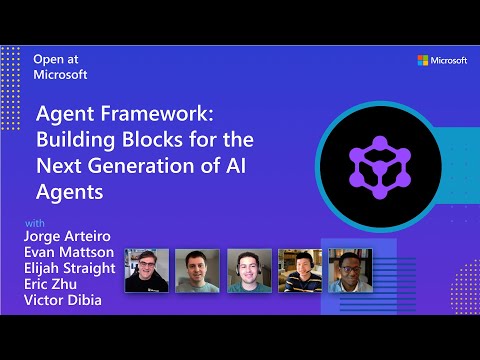
Watch the full Agent Framework introduction (30 min)
Is this the right framework for you?
MAF is a strong fit if you:
- are building agents and workflows you expect to run in production,
- need orchestration beyond a single prompt or stateless chat loop,
- want graph-based patterns such as sequential, concurrent, handoff, and group collaboration,
- care about durability, restartability, observability, governance, or human-in-the-loop control,
- need provider flexibility so your architecture can evolve without major rewrites.
Key Features
Explore new MAF capabilities and real implementation patterns on the official blog.
- Python and C#/.NET Support: Full framework support for both Python and C#/.NET implementations with consistent APIs
- Multiple Agent Provider Support: Support for various LLM providers with more being added continuously
- Middleware: Flexible middleware system for request/response processing, exception handling, and custom pipelines
- Orchestration Patterns & Workflows: Build multi-agent systems with graph-based workflows supporting sequential, concurrent, handoff, and group collaboration patterns; includes checkpointing, streaming, human-in-the-loop, and time-travel
- Foundry Hosted Agents (new): Deploy and host your agents to Foundry-hosted infrastructure with just 2 additional lines of code
- Observability: Built-in OpenTelemetry integration for distributed tracing, monitoring, and debugging
- Declarative Agents: Define agents using YAML for faster setup and versioning
- Agent Skills: Build domain-specific knowledge bases from multiple sources—files, inline code, class libraries—for agents to discover and use
- AF Labs: Experimental packages for cutting-edge features including benchmarking, reinforcement learning, and research initiatives
- DevUI: Interactive developer UI for agent development, testing, and debugging workflows
Table of Contents
Getting Started
Installation
Python
pip install agent-framework
# This will install all sub-packages, see `python/packages` for individual packages.
# It may take a minute on first install on Windows.
.NET
dotnet add package Microsoft.Agents.AI
# For Foundry integration (used in the .NET quickstart below):
dotnet add package Microsoft.Agents.AI.Foundry
dotnet add package Azure.AI.Projects
dotnet add package Azure.Identity
Learning Resources
- Overview - High level overview of the framework
- Quick Start - Get started with a simple agent
- Tutorials - Step by step tutorials
- User Guide - In-depth user guide for building agents and workflows
- Migration from Semantic Kernel - Guide to migrate from Semantic Kernel
- Migration from AutoGen - Guide to migrate from AutoGen
Quickstart
Basic Agent - Python
Create a simple Azure Responses Agent that writes a haiku about the Microsoft Agent Framework
# pip install agent-framework
# Use `az login` to authenticate with Azure CLI
import os
import asyncio
from agent_framework import Agent
from agent_framework.foundry import FoundryChatClient
from azure.identity import AzureCliCredential


async def main():
    # Initialize a chat agent with Microsoft Foundry
    # the endpoint, deployment name, and api version can be set via environment variables
    # or they can be passed in directly to the FoundryChatClient constructor
    agent = Agent(
      client=FoundryChatClient(
          credential=AzureCliCredential(),
          # project_endpoint=os.environ["FOUNDRY_PROJECT_ENDPOINT"],
          # model=os.environ["FOUNDRY_MODEL_DEPLOYMENT_NAME"],
      ),
      name="HaikuAgent",
      instructions="You are an upbeat assistant that writes beautifully.",
    )

    print(await agent.run("Write a haiku about Microsoft Agent Framework."))

if __name__ == "__main__":
    asyncio.run(main())
Basic Agent - .NET
Create a simple Agent, using Microsoft Foundry that writes a haiku about the Microsoft Agent Framework
// This sample shows how to create and run a basic agent with AIProjectClient.AsAIAgent(...).

using Azure.AI.Projects;
using Azure.Identity;
using Microsoft.Agents.AI;

string endpoint = Environment.GetEnvironmentVariable("AZURE_AI_PROJECT_ENDPOINT") ?? throw new InvalidOperationException("AZURE_AI_PROJECT_ENDPOINT is not set.");
string deploymentName = Environment.GetEnvironmentVariable("AZURE_AI_MODEL_DEPLOYMENT_NAME") ?? "gpt-5.4-mini";

AIAgent agent =
    new AIProjectClient(new Uri(endpoint), new DefaultAzureCredential())
    .AsAIAgent(model: deploymentName, instructions: "You are an upbeat assistant that writes beautifully.", name: "HaikuAgent");

// Once you have the agent, you can invoke it like any other AIAgent.
Console.WriteLine(await agent.RunAsync("Write a haiku about Microsoft Agent Framework."));
More Examples & Samples
Python
- Getting Started: progressive tutorial from hello-world to hosting
- Agent Concepts: deep-dive samples by topic (tools, middleware, providers, etc.)
- Workflows: workflow creation and integration with agents
- Hosting: A2A, Azure Functions, Durable Task hosting
- End-to-End: full applications, evaluation, and demos
.NET
- Getting Started: progressive tutorial from hello agent to hosting
- Agent Concepts: basic agent creation and tool usage
- Agent Providers: samples showing different agent providers
- Workflows: advanced multi-agent patterns and workflow orchestration
- Hosting: A2A, Durable Agents, Durable Workflows
- End-to-End: full applications and demos
Community & Feedback
- Found a bug? File a GitHub issue to help us improve.
- Enjoying MAF?
to show your support and help others discover the project.
- Have questions? Join our Discord or visit weekly office hours.
Troubleshooting
Authentication
| Problem | Cause | Fix |
|---|---|---|
| Authentication errors when using Azure credentials | Not signed in to Azure CLI | Run az login before starting your app |
| API key errors | Wrong or missing API key | Verify the key and ensure it's for the correct resource/provider |
Tip:
DefaultAzureCredentialis convenient for development but in production, consider using a specific credential (e.g.,ManagedIdentityCredential) to avoid latency issues, unintended credential probing, and potential security risks from fallback mechanisms.
Environment Variables
For environment variable configuration specific to each sample, refer to the README in the sample directory (Python samples | .NET samples).
Contributor Resources
Important Notes
Important
If you use Microsoft Agent Framework to build applications that operate with any third-party servers, agents, code, or non-Azure Direct models (“Third-Party Systems”), you do so at your own risk. Third-Party Systems are Non-Microsoft Products under the Microsoft Product Terms and are governed by their own third-party license terms. You are responsible for any usage and associated costs.
We recommend reviewing all data being shared with and received from Third-Party Systems and being cognizant of third-party practices for handling, sharing, retention and location of data. It is your responsibility to manage whether your data will flow outside of your organization’s Azure compliance and geographic boundaries and any related implications, and that appropriate permissions, boundaries and approvals are provisioned.
You are responsible for carefully reviewing and testing applications you build using Microsoft Agent Framework in the context of your specific use cases, and making all appropriate decisions and customizations. This includes implementing your own responsible AI mitigations such as metaprompt, content filters, or other safety systems, and ensuring your applications meet appropriate quality, reliability, security, and trustworthiness standards. See also: Transparency FAQ